


User Reviews
-
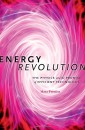
As we draw nearer and nearer to the depletion of our most commonly used energy source—fossil fuels—the constructive discussion of alternative (and most importantly, sustainable) energy sources is becoming increasingly vital. In Energy Revolution: The Physics and the Promise of Efficient Technology, Harvard academic Mara Prentiss discusses the use of efficient technology in the production of green energy from a surprisingly optimistic point of view. A stimulating, fact-filled read, Energy Revolution is best suited for readers with a scientific background or general knowledge of basic physics. Due to its heavy technical arguments, this book is not intended for the casual reader hoping to learn a bit more about clean energy production. The author explains how a wide range of alternative energies can be produced and discusses their pros and cons in a well-researched and statistically supported manner. Unfortunately, most of the statistics and examples used are based on the US and there is not much reference to other countries around the world.Energy Revolution begins with a dense, unfocussed, statistics-filled introduction that describes the historical and contemporary state of US energy use. This introduction is not for the faint of heart and readers may be scared away by its complicated ideas, which come quickly one after the other. Readers should not be discouraged, however, as the following chapters take a step back, and time is taken to explain new concepts more clearly. The scene is set in the introduction and we gain an understanding of how energy revolutions have occurred in the past (e.g. from wood burning to coal burning during the early 1800’s). The current energy-use requirements of the US, as well as where this energy is sourced and what it is used for, are also well introduced.After the introduction, Prentiss discusses the ‘Foundations of a Renewable Future’. She breaks the section up into an overview of renewable energy and finishes on a discussion of how generating electric power from sustainable sources is the way toward a renewable future. Coming straight after the complicated introduction, this section of the book seems refreshingly simple, with jargon well explained and each idea talked through step-by-step. Basic physical concepts and their roles in alternative energy production are introduced in an engaging and easy-to-follow style. Prentiss eventually concludes with a well-constructed technical argument that a revolution resulting in a solely electrical-power-consuming society will easily allow for a switch to a renewable future.The second law of thermodynamics states that energy can be neither destroyed nor created, only transformed from form to form – this conversion, however, is never one hundred percent efficient. Prentiss stresses the importance of this fundamental law of physics and applies it to the production of various alternative energies and their conversion to electricity. Prentiss discusses hydropower, wind power and solar power. Within these discussions, she gently takes the reader through how the power can be harnessed and converted to electricity, and calculates the theoretical efficiencies of each technology. She demonstrates that hydropower cannot provide for US energy requirements – even if one hundred percent of US rainfall is collected in a one hundred meter tall dam, less than half of the US energy requirements would be met. Wind power and solar power are, however, shown to be able to provide sufficient (albeit irregular) energy, with clearly explained calculations and well-referenced statistics.Lastly, Prentiss discusses ‘Energy Links’, tying all the readers’ newly gained knowledge about alternative energy sources together. She discusses the important role that the development of technology plays in the revolution towards a renewable future. Refreshingly, Prentiss states that lifestyle sacrifices need not be made in order to live more sustainably and that efficient technologies can take the burden off of our shoulders, as well as actually improve our lifestyles. The example of using LED lightbulbs over incandescent ones is given, along with others, backing up her argument effectively.Throughout Energy Revolution, statistics, quotes and graphs are used to back up all statements and arguments, all of which are referenced from a wide range of reliable sources. Although the book was written in 2015, many statistics used describe 2011 and even earlier. It would be better if more recent statistics were used throughout, as Prentiss herself points out that energy trends can change quickly. Furthermore, some examples that seem obvious and important in the area of discussion were not used, such as looking towards the Netherlands when discussing wind power.Overall, Energy Revolution is a well-written and well-structured book, filled with both useful and reliable information. At times a little dense and heavy, this book would best be considered as a reference book for interested and scientifically minded audiences, rather than a casual read. For less scientifically minded people looking for an informative read about alternative energy production, Unstoppable: Harnessing Science to Change the World by Bill Nye is perhaps a better place to start.
Add a Review
To leave a review you need to be logged in to your account on ENGins.
Sign up for free or log in if you already have an account.